HIV & STI Testing
Testing
Our nurse is available, no appointment needed, on Tuesdays from 1:00–4:00pm. She can test for HIV, Hepatitis A/B/C, STIs (Chlamydia/Gonorrhea/Syphilis), and pregnancy. All tests are free and confidential.
Additionally, APSS is working alongside the Community Based Research Centre to provide HIV rapid self-test kits to individuals in our community. These kits are available to pick up at our location and free to take home. Please contact our Education Coordinator education@apssregina.ca for more information.
Know Your Status
Why Should I Get Tested?
STI testing can help find an infection early. If you know that you have an infection, you can get treatment and prevent spreading the infection to others. Left untreated, some STIs can lead to serious problems.
STI tests will depend on which type of infection you may have. Most commonly, you will have to give a blood sample or a urine sample. The nurse or doctor testing you may also swab your genitals or throat. Blood work results usually take a week.
For more information on STIs, check out our Safer Sex Basics.
Be in charge of your own sexual health and your body by getting tested every 5 years or every time you change sexual partners/after a high risk exposure.
The Process
What Happens When I Get Tested for HIV?
1 in 5
people living with HIV have not been diagnosed.
Is HIV testing confidential?
Yes, a person's decision to pursue HIV testing and their HIV status are both confidential pieces of information, except in very rare cases. As with all medical information, it is the responsibility of the provider (that is, the tester) to ensure that the confidentiality of the person being tested is maintained.
There are very limited circumstances in which confidentiality may be broken without consent. For example, the law may require your personal information to be released or some information may be required to be released to public health.
A person being tested for HIV must provide informed consent. To be able to provide informed consent, the person must be able to:
- Understand the advantages and disadvantages of HIV testing;
- Interpret the meaning of the test results; and,
- Understand how HIV can be transmitted.
Pre-test Counselling
Before an HIV test is given, people should receive appropriate information and/or counselling through a pre-test discussion. During pre-test counselling:
- The person is asked about their knowledge of HIV transmission and prevention and any sexual and/or drug use behaviours that may have put them at risk for HIV.
- The testing process is explained, particularly when point-of-care testing is being used and there is a possible need for confirmatory testing.
- A conversation about the person's post-test support needs (such as risk reduction services, counselling, etc.).
- Pre-test counselling may also include a discussion about testing for other sexually transmitted or blood-borne infections, such as chlamydia, gonorrhea, syphilis, and HCV.
What Kinds of HIV Tests Are Available in Saskatchewan?
Tests to find the HIV antibody are the most widely used tests for HIV. Antibodies are proteins made by your immune system to protect you against HIV. There are 3 main tests that are commonly used to test for HIV infection.
- Point-of-care or rapid testing
The finger is pricked and a drop of blood is placed into the circular vial. About one minute later the results show up: either positive or negative by the indication of dots. If the test is non-reactive (or negative), no further testing is required; however, if the test is reactive, then a second blood sample is taken and sent to the laboratory for confirmatory testing. The person will have to return for a second visit to receive the final result. - Dried Blood Spot (DBS) testing
This approach uses a sample of blood from a finger prick that is collected as a blot on a card. The blood spot is dried at room temperature and mailed to a public health laboratory for screening and confirmatory testing. DBS testing has the advantage of being able to be used in rural and remote areas because the samples are very stable once collected and do not need to be refrigerated. Samples can also be collected by non-medical staff. Dried blood spots can also be used to test for other blood-borne infections, including HBV and HCV. - "Standard" HIV test
In this test, a small tube of blood is collected and sent to the medical laboratory to check for the HIV antibody.
At APSS, we offer all of the above.
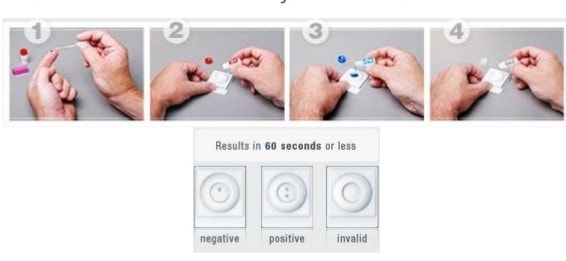
Point of Care/Rapid Test
Post-test Counselling
After a person is tested for HIV, whether the person tests HIV positive or negative, the provider should offer post-test counselling or information. The provider should tailor the approach to meet the context-specific requirements of the individual.
What happens if the result is negative?
The provider explains the result, ensures the person understands the result, and discusses any other questions about HIV testing, transmission, or prevention. They may also discuss the need for further safer sex or harm reduction education or other services, provide referral to other community services as appropriate, and discuss opportunities for other testing, such as STIs or HCV, if appropriate.
A word on the window period — The window period is the period of time from when a person is exposed to HIV to the time when an HIV test can tell for certain whether they have HIV. People who test negative but are in the window period, may be advised to test again at an appropriate time to ensure the result is accurate. For those who test HIV negative, but are at continuing high risk for infection, efforts should be made to actively ensure that they are linked to and engaged in enhanced prevention services and risk-reduction counselling. They should also be encouraged to repeat testing as necessary.
What happens if the result is positive?
The process can vary across the country but, generally speaking, when a test reveals that the individual is HIV positive, the post-test counselling is extensive (and may take place over time, depending on the needs of the person receiving the diagnosis). Typically, a provider gives a person time to absorb the results, discusses the impact of the positive test result, and provides the opportunity for the person to ask questions. Post-test counselling following a positive diagnosis usually includes support and extensive discussion and comprehensive linkage to other services, including HIV care.
After a client receives a positive HIV test result, the result is reported to public health. A positive result initiates a series of processes to support the care of the client, to identify recent partners who may benefit from testing, and to prevent onward transmission.
Regina Locations
Other Testing Locations in Regina
You can also get an HIV or STI test done free at your health clinic or at these locations in Regina:
Sexual Health Clinic
2110 Hamilton St. rm. M100
Tues/Wed/Fri 9–11:30am & 1–4pm
Mon/Fri 12–4pm & 6–8:30pm
Planned Parenthood Regina
1920B Francis St
Mon/Tues/Fri 9–5pm
Wed/Thurs 9–7:30pm
Sat 1–5pm